# Mylonite





Mylonite is a self-hosted sync server for Obsidian. Use it with the Mylonite plugin to pair devices and sync end-to-end encrypted vault data through your own storage.
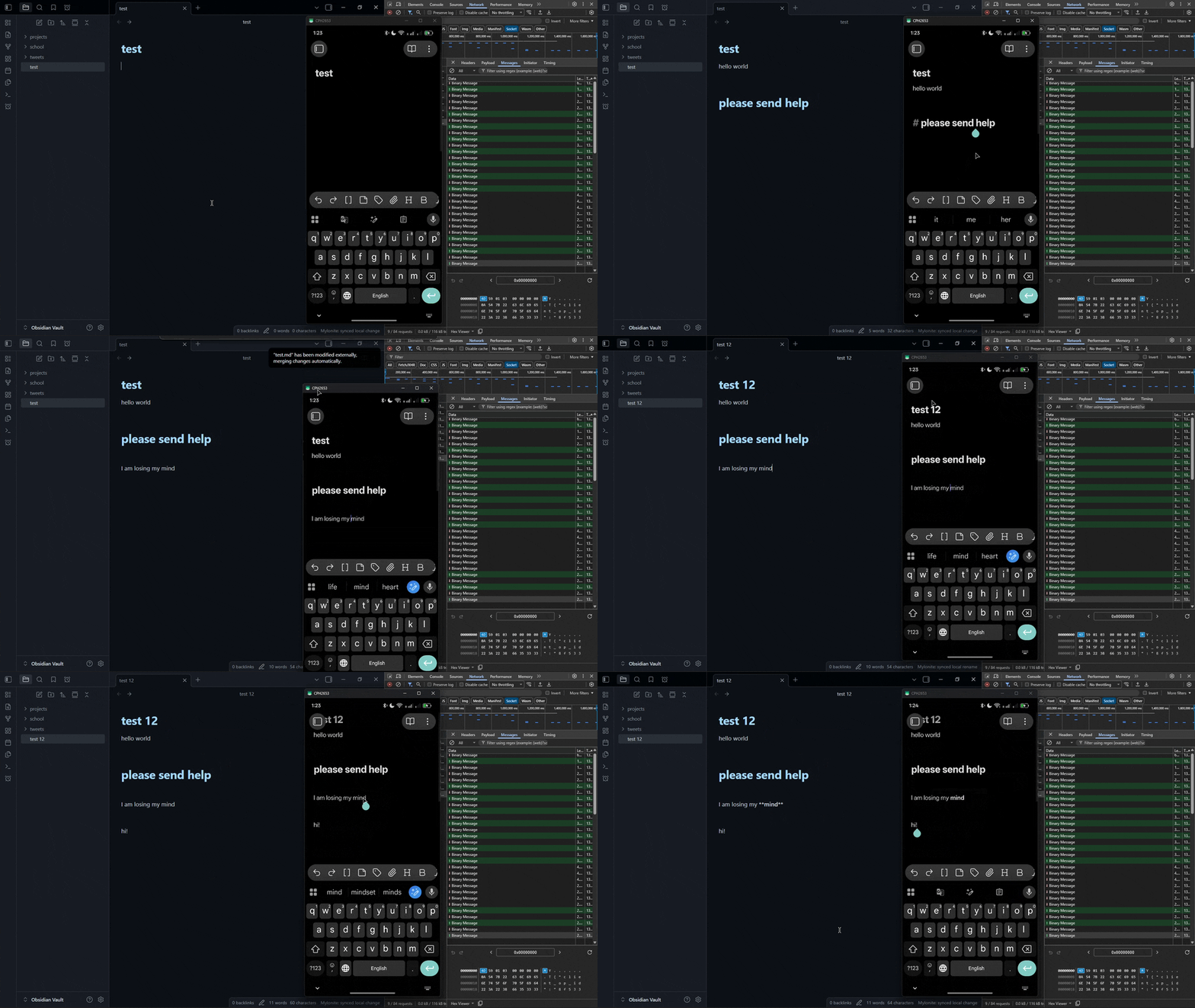 Synchronization showcase using a remote server hundreds of kilometers away. Vault data remains end-to-end encrypted throughout the sync process.
> [!NOTE]
> Mylonite is still in early development, expect bugs and breaking changes.
## Server
Install the latest binary.
Debian/Ubuntu x86_64:
```bash
curl -fL -o /tmp/mylonite \
https://github.com/z1xus/mylonite/releases/latest/download/mylonite-x86_64-unknown-linux-gnu
sudo install -m 0755 /tmp/mylonite /usr/local/bin/mylonite
mylonite --version
```
Other platforms: grab the matching binary from Releases and place it on your `PATH`.
Create the config and the first vault's pairing token:
```bash
mylonite init
```
Run the server:
```bash
mylonite serve
```
The default config lives at:
- Linux: `~/.config/mylonite/config.toml`
- macOS: `~/Library/Application Support/mylonite/config.toml`
- Windows: `%APPDATA%\mylonite\config.toml`
Keep `listen = "127.0.0.1:9821"` when a reverse proxy terminates TLS on the same host.
Use `listen = "0.0.0.0:9821"` and set `public_url` to the reachable URL if the server should accept direct connections.
### Systemd
Drop this unit at `/etc/systemd/system/mylonite.service`, replacing `YOUR_USER` with the account that ran `mylonite init`:
```ini
[Unit]
Description=Mylonite sync server
After=network-online.target
Wants=network-online.target
[Service]
ExecStart=/usr/local/bin/mylonite serve
Restart=on-failure
User=YOUR_USER
[Install]
WantedBy=multi-user.target
```
```bash
sudo systemctl daemon-reload
sudo systemctl enable --now mylonite
sudo systemctl status mylonite
```
Windows: run `mylonite serve` with NSSM, WinSW, or your preferred service wrapper.
### Docker
```bash
docker run -p 9821:9821 \
-v ./config.toml:/etc/mylonite/config.toml:ro \
-v ./data:/var/lib/mylonite \
ghcr.io/z1xus/mylonite:latest
```
## Plugin
[Install Mylonite](obsidian://show-plugin?id=mylonite) from the [Obsidian community plugin directory](https://community.obsidian.md/plugins/mylonite).
Beta install: install [BRAT](https://tfthacker.com/brat-quick-guide), then add `https://github.com/Z1xus/mylonite` as a beta plugin.
Manual install: download [mylonite-obsidian-plugin.zip](https://github.com/z1xus/mylonite/releases/latest/download/mylonite-obsidian-plugin.zip) from Releases and extract it into:
```text
/.obsidian/plugins/mylonite/
```
Enable Mylonite in Obsidian's community plugins list, then open its settings.
## Pairing
The first device must be paired with the pairing token. Every other device joins through a short-lived invite approved by an already-paired device.
### First device
1. Enter your server URL (and optionally your device label).
2. Paste the pairing token printed by `mylonite init`.
3. Click Pair.
### Additional devices
1. On an already-paired device, open Mylonite settings -> Add another device -> Create. Mylonite shows a QR code, an invite code, and the server URL.
2. On the new device:
* If the camera is available, scan the QR code. It will open an invite page on your Mylonite server.
* Otherwise, type the server URL and invite code manually or paste the invite code.
3. Compare the six-digit safety code on both devices, then click Approve on the already-paired device.
If you ever lose access to every paired device, the vault data is unrecoverable — the encryption key was generated on the first device and the server only holds ciphertext. Wipe the dead vault and start fresh:
```bash
mylonite vault delete
mylonite vault create "My Vault"
# pair the new device with the freshly printed token
```
## Develop
Requirements:
- Rust 1.85+
- Bun 1.2+
Run locally:
```bash
cargo run -p mylonite -- serve --config dev/config.toml
cargo run -p mylonite -- vault create "My Vault" --config dev/config.toml
```
Build the plugin:
```bash
cd plugin
bun install
bun run build
```
Run checks:
```bash
cargo fmt --check
cargo clippy -p mylonite --all-targets -- -D warnings
cargo test -p mylonite
cd plugin
bun run test
bun run build
```